
The Guntur Growing Region — Why This Soil Matters
The Guntur district in Andhra Pradesh has been growing chillies for over 200 years. Deep red iron-rich soil with high mineral content and a dry climate characterised by intense heat create growing conditions that concentrate capsaicin and colour pigment in a way that temperate regions simply cannot replicate. The local climate — with hot, dry summers and well-drained soil — produces conditions where the chilli plant is put under just enough stress to push its active compounds to their highest levels.
This is not romantic storytelling. The specific mineral composition of Guntur's laterite red soil, combined with the low annual rainfall concentrated into predictable monsoon windows, creates a stress cycle for the crop that temperate growing regions cannot match. The district grows multiple varieties, but Sannam (S4) is the most widely traded, carrying a high ASTA colour value and a balanced heat profile that has made it the global benchmark for South Indian red chilli.
Planting and Growing Season
Chillies are planted twice a year in Guntur. The Kharif crop — the monsoon season planting — runs from June to October. The Rabi crop, planted in the post-monsoon period, runs from November to February. Both cycles produce commercially significant yields, but the Rabi crop is often considered higher quality due to the drier, more controlled weather conditions during the critical maturation phase.
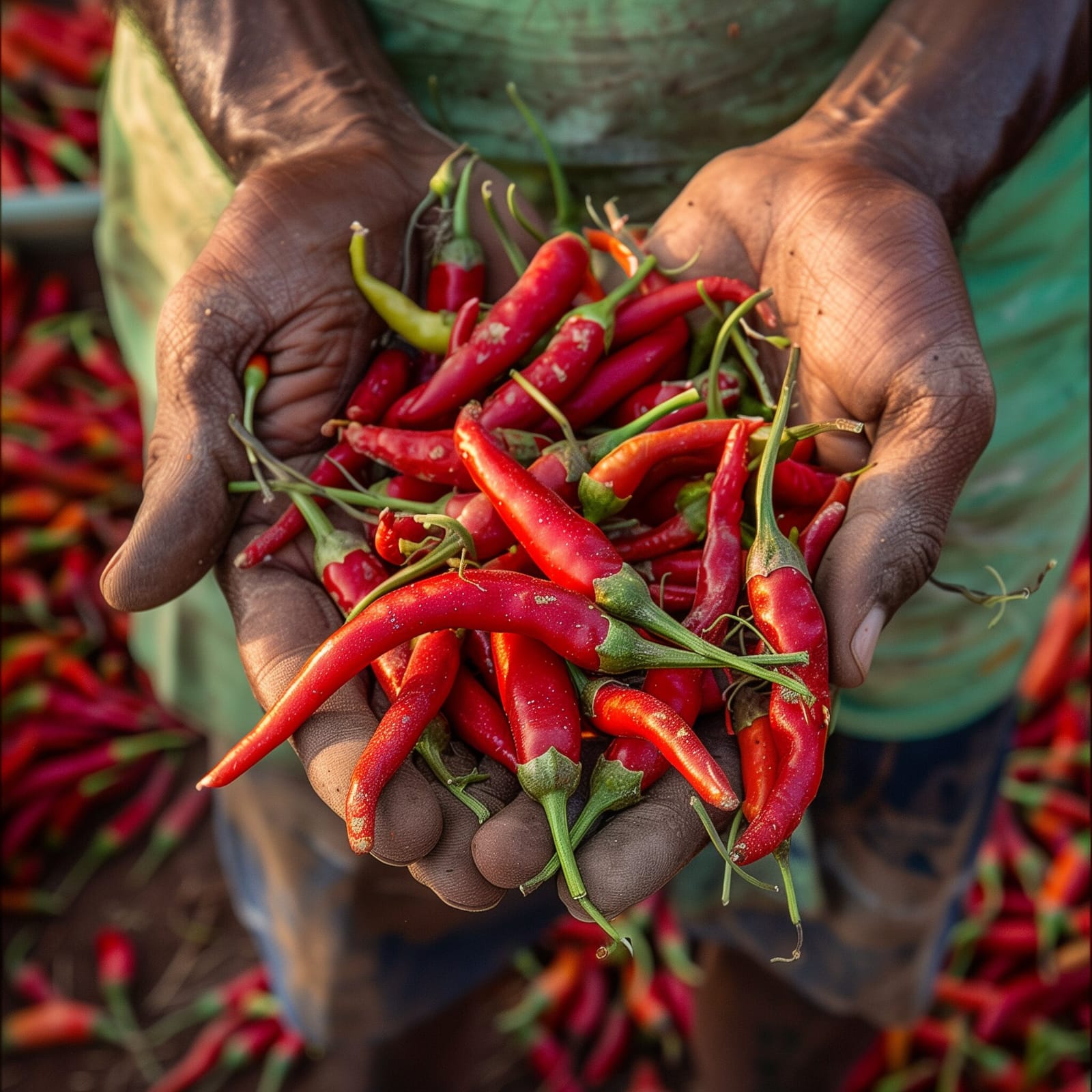
Farmers prepare the soil carefully, applying natural compost and maintaining dense planting rows that maximise sun exposure per plant. The plants take 3 to 4 months to reach full maturity from transplanting. During this period, the chillies transition from green to a deep, vivid red — a visual marker that capsaicin and carotenoid content have reached their peak. This colour development, driven by the breakdown of chlorophyll and the synthesis of capsanthin, is the clearest outward signal that the crop is ready to harvest.
Harvesting — Why Timing Matters
Guntur chillies are harvested by hand, at peak ripeness. This is not a romantic tradition — it is a quality requirement. Mechanical harvesting would damage the pods, introduce immature chillies into the batch, and destroy the structural integrity of the skin that protects the volatile oils inside.
Farmers pick each pod individually, checking for full red colour and firm texture — the two primary indicators that capsaicin and carotenoid content are at their peak. The timing of harvest directly affects the quality of the final dried product. Pods harvested even a week early will have lower colour values, lower heat units, and a comparatively flat aroma. Pods harvested late risk losing structural integrity before drying. Peak harvest is a narrow window, and experienced farmers read it without instruments.
Sun-Drying on Open Yards
After harvest, the chillies are laid out on open drying yards for 5 to 10 days under direct sunlight. This is the step that most commercial producers replace with industrial dryers. The reason is speed: machine-drying takes hours instead of days. The trade-off in quality is significant and measurable.
Traditional sun-drying at ambient temperature — typically 30 to 45°C in peak Andhra Pradesh conditions — allows moisture to leave the chilli slowly. This gradual process is critical because the active compounds in a chilli are temperature-sensitive. The oils that carry the characteristic aroma, the carotenoids that produce deep red colour, and the capsaicinoids that deliver heat all begin to degrade above 60°C. Sun-drying keeps the temperature below this threshold throughout the process. The result is a measurably richer, more aromatic, more vividly coloured product compared to anything machine-dried at high heat.
What to look for when you buy: Guntur Sannam chillies should have a deep, consistent red colour — not pale orange or brown. The pods should be firm, not brittle. Open one and it should release a sharp, immediate aroma. These are signs the chilli was harvested at full maturity and dried correctly.